
Stop Chasing Light: How to Predict Perfect Landscape Light
Landscape photography is often presented as a game of luck. Right place, right time, perfect conditions.
But after years in the field, one thing became very clear to me: strong images are rarely about luck. They are about preparation, understanding light, and knowing where to stand before it happens.
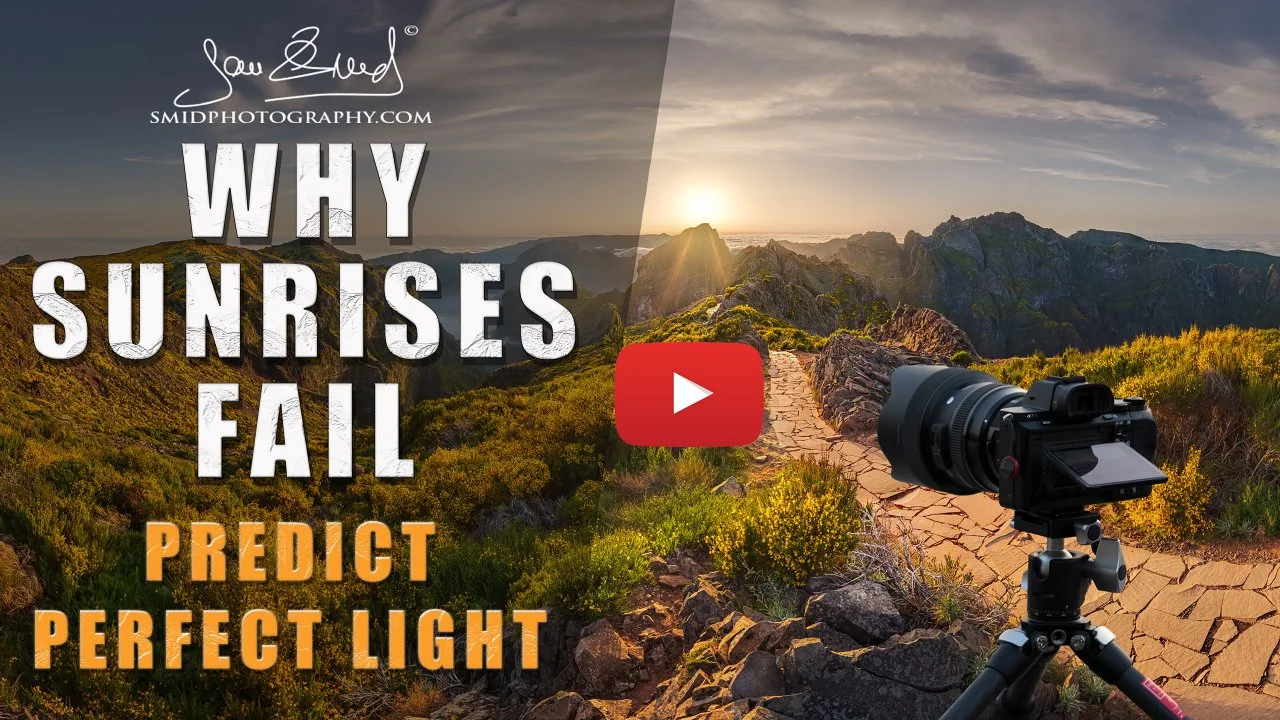
This article complements my latest YouTube video, where I break down how to stop chasing light and start predicting it — based on real mistakes, real locations, and real decisions made in the field. If your photos often feel flat, lifeless, or “almost good but not quite”, this shift in thinking can change everything.
🎥 Watch the Full Field Review:
🌅 Why “Good Conditions” Often Don’t Deliver Good Photos
Many photographers believe strong landscape images come down to luck. Right weather, nice sunrise, dramatic clouds. But even with seemingly perfect conditions, the results often feel disappointing.
The reason is simple: light is misunderstood.
It’s not enough to know when sunrise or sunset happens. What matters far more is where the light comes from, how it moves through terrain, and which parts of the scene it actually touches. Most photographers show up on time — but stand in the wrong place, facing the wrong direction.
This is exactly what the video focuses on.
Light Is Predictable — If You Know What to Look For
Light is not random. It follows structure.
Once you understand a few basic principles, landscape photography shifts from guessing to intention. Instead of hoping for drama, you start anticipating it. Instead of chasing light across locations, you position yourself where it’s likely to appear.
In the video, I explain how this way of thinking developed for me — and why it took years to realize that the problem wasn’t bad luck, but bad planning.
🧭 Direction Matters More Than Timing
Most photographers focus on time: sunrise, sunset, golden hour, blue hour.
But direction is often more important.
Whether the light comes from the front, side, or behind your subject completely changes how a landscape reads in the final image. Texture, depth, contrast, and atmosphere depend on it. Two photographers can stand ten meters apart at the same time — and come home with completely different results.
🎯 This is one of the key topics covered in the video, with real field examples.
📱 Planning vs. Guessing in the Field
Modern planning tools allow photographers to see the path of the sun and moon long before they arrive on location. Used properly, this eliminates most uncertainty.
Instead of asking “Will it work?”, you start asking “Which option works best if the light breaks here?”
That change alone dramatically increases consistency.
In the video, I show how this planning mindset works in practice — and why it’s essential when conditions are unpredictable.
☁️ Why Weather Forecasts Mislead Photographers
A simple weather icon is almost meaningless for landscape photography.
What really matters is cloud structure and movement, not just cloud coverage.
Some cloud layers block light entirely. Others create colour, glow, and mood. Understanding the difference is critical — and it’s one of the reasons why many sunrises “fail” despite promising forecasts.
This is another topic explored in depth in the video, because it’s impossible to explain properly in a few paragraphs.
❌ The Most Common Sunrise Mistake
One of the biggest mistakes photographers make is planning a single spot and a single direction. When the light appears somewhere else, they assume the shoot failed.
The solution is simple — but not obvious.
I explain this exact mistake in the video, including a real story from the field where this mindset cost me a shoot that could have worked beautifully.
Want to go deeper than this article?
If you want to understand how to actually use tools like this in the field — I also offer 1-on-1 photography mentoring focused on real shooting, not theory.
And if you want to apply this approach where light decisions truly matter:
See you in the field — or on YouTube.
About the Author
Jan Smid is a Master QEP, Zeiss Ambassador and expedition leader working across a wide range of photographic environments — from demanding locations such as Namibia, Alaska, Iceland or Lofoten, to more relaxed and accessible destinations including Madeira and the Wachau. He is the recipient of over 300 awards from international photography competitions and runs an independent YouTube channel focused on real field photography, composition and long-term photographic growth.
Frequently Asked Questions About Predicting Light in Landscape Photography
-
Because standard forecasts don’t explain how light actually interacts with terrain and cloud layers. Even with “good conditions”, light may never reach the part of the landscape you’re photographing. Predicting where the light will appear matters more than simply showing up for sunrise.
-
By understanding light direction, cloud structure, and how the sun moves across the landscape. Planning replaces guessing. The video explains how a few simple tools and a change in mindset dramatically improve consistency.
-
In many cases, yes. Front light, backlight, and side light create completely different results, even at the same moment. Direction controls depth, texture, and atmosphere far more than timing alone.
-
You don’t need expensive gear, but planning apps can save years of frustration. They allow you to visualize sun and moon paths in advance and eliminate most guesswork before you even arrive on location.
-
Side light is often the most effective because it creates interaction between light and shadow. It reveals shape, scale, and surface detail that flat or front-lit scenes usually lack.
-
Relying on a single spot and direction is one of the most common mistakes. Planning multiple viewpoints gives you options when light appears somewhere else — turning failed shoots into successful ones.