
Madeira Through a Different Lens — The Photographer's Insider Guide
By Jan Smid, Master QEP · ZEISS Ambassador · sold-out expeditions since 2018
📍 Updated April 2026 · Based on real field experience across different seasons
Madeira is volcanic, vertical, and completely unpredictable. One hour you are standing above a sea of clouds on a 1,800-metre ridge watching the Atlantic light turn the basalt gold. The next, the fog rolls in from the north and the ancient laurel trees at Fanal disappear into a scene that feels like the dawn of time. This island doesn't do "ordinary" light, and it certainly doesn't reward those who follow the generic guidebooks.
The Veteran’s Perspective: A Decade on the Island I have been scouting and leading Madeira photography expeditions since 2016. After more than ten private and group workshops, I’ve watched the island change. Yes, the crowds have arrived, and places like Pico do Arieiro at sunrise can feel like a stadium. But here is the difference: my expeditions aren't about standing in line for the "classic" shot.
The "May" Advantage: While I’ve shot Madeira in the deep orange of November and the moody mist of October, May is my absolute peak. This is when the mountains are in full bloom, the vertical gardens are at their most vibrant, and the island is literally breathing.
Solitude in the Chaos: Even in 2026, we still find the silence. I know where the crowds stand, when they leave, and what is on the other side of the peak where nobody is looking. We don't just shoot differently; we live differently—eating at local "tascas" with the residents, far away from the overpriced tourist traps.
Beyond the Icons This is not just another list of best places to photograph in Madeira. While we shoot the icons like Ribeira da Janela or the misty Laurisilva forests, this guide is about strategy. It’s about reading the weather, understanding the verticality of the light, and knowing which hidden highland viewpoints are ignored by every other guide.
Every image in my Madeira gallery is a real-world result of these expeditions. No stock photos, no reconstructions—just the raw power of Madeira when you know how to read it.
Join the Expedition If you want to move beyond the postcards and experience the island as an insider, join us for the upcoming Madeira Spring Photo Expeditions in 2026 and 2027. This is where we hunt the light, find the hidden blooms, and master the art of the vertical landscape.
Pico do Arieiro: The Magnificent Instagram Tragedy
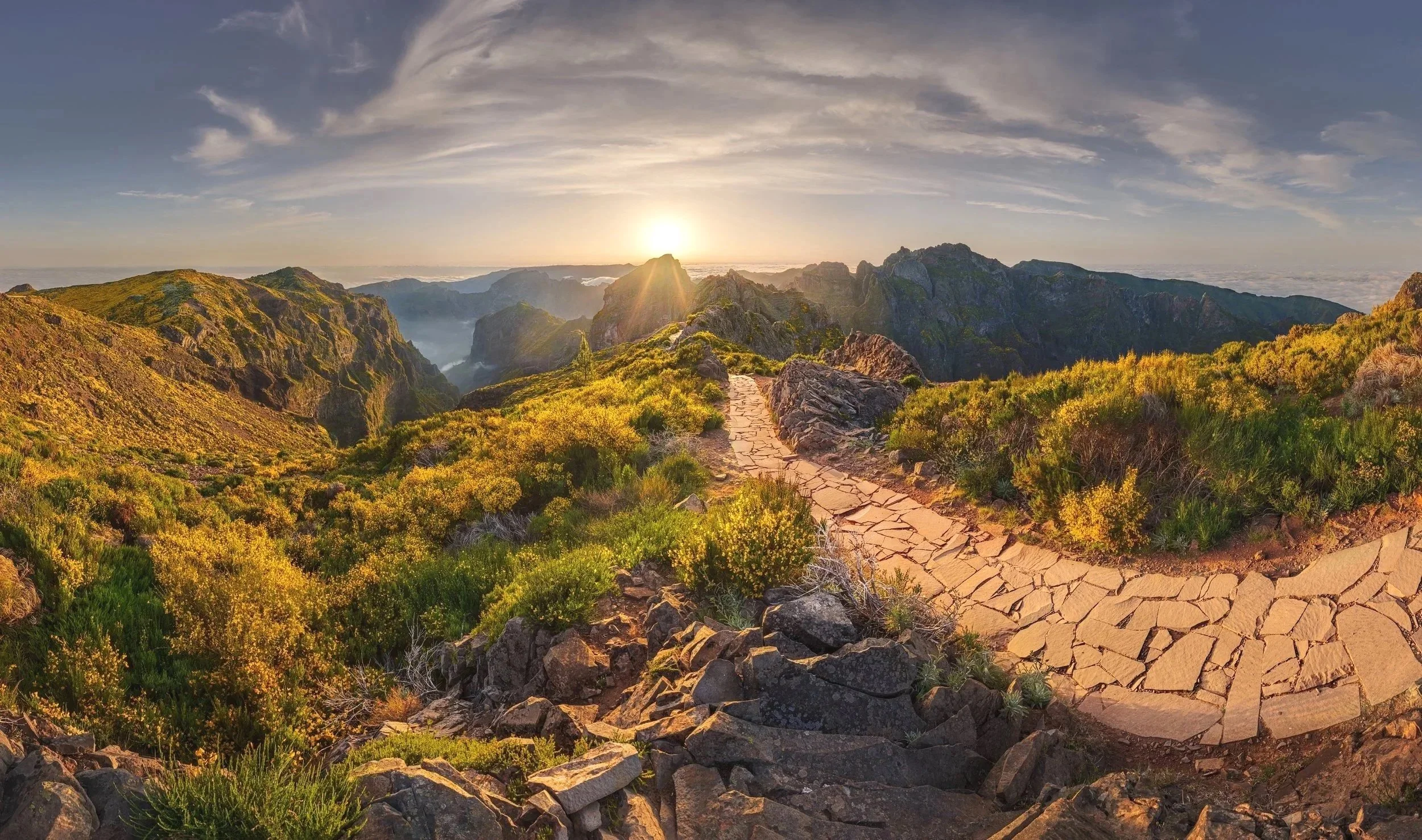
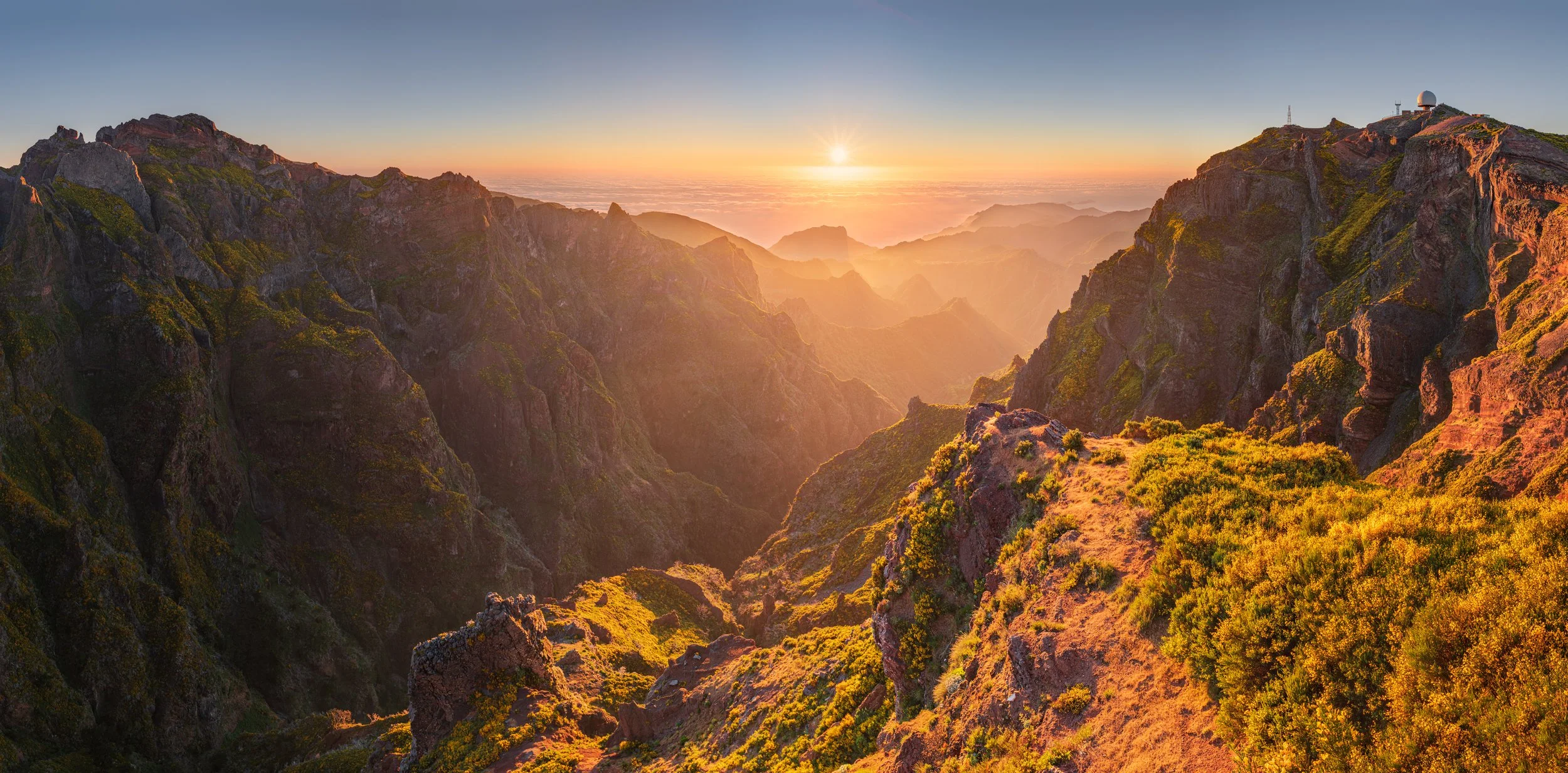
At 1,818 metres, Pico do Arieiro is the third highest peak on Madeira and the most accessible "high-altitude" playground in the Atlantic. Because you can drive your car literally to the summit, it has become a victim of its own success.
The Harsh Truth: Why I Avoid Sunrise I remember the pre-COVID days when we would stand on the summit at dawn in absolute silence. Today? Sunrise at Arieiro has become a nightmare. Much like the stairs at Reinebringen on the Lofoten Islands, over-tourism and Instagram have transformed this location into a stadium.
The main parking lot is often full two hours before the first light. Taxis arrive in waves, and you’ll find people carrying portable speakers, while hundreds of visitors fight over every inch of the railings for a selfie. To be blunt: I avoid Arieiro at sunrise like the plague. There is no "soul" left in that experience unless you enjoy being in a mosh pit of tripods and smartphones.
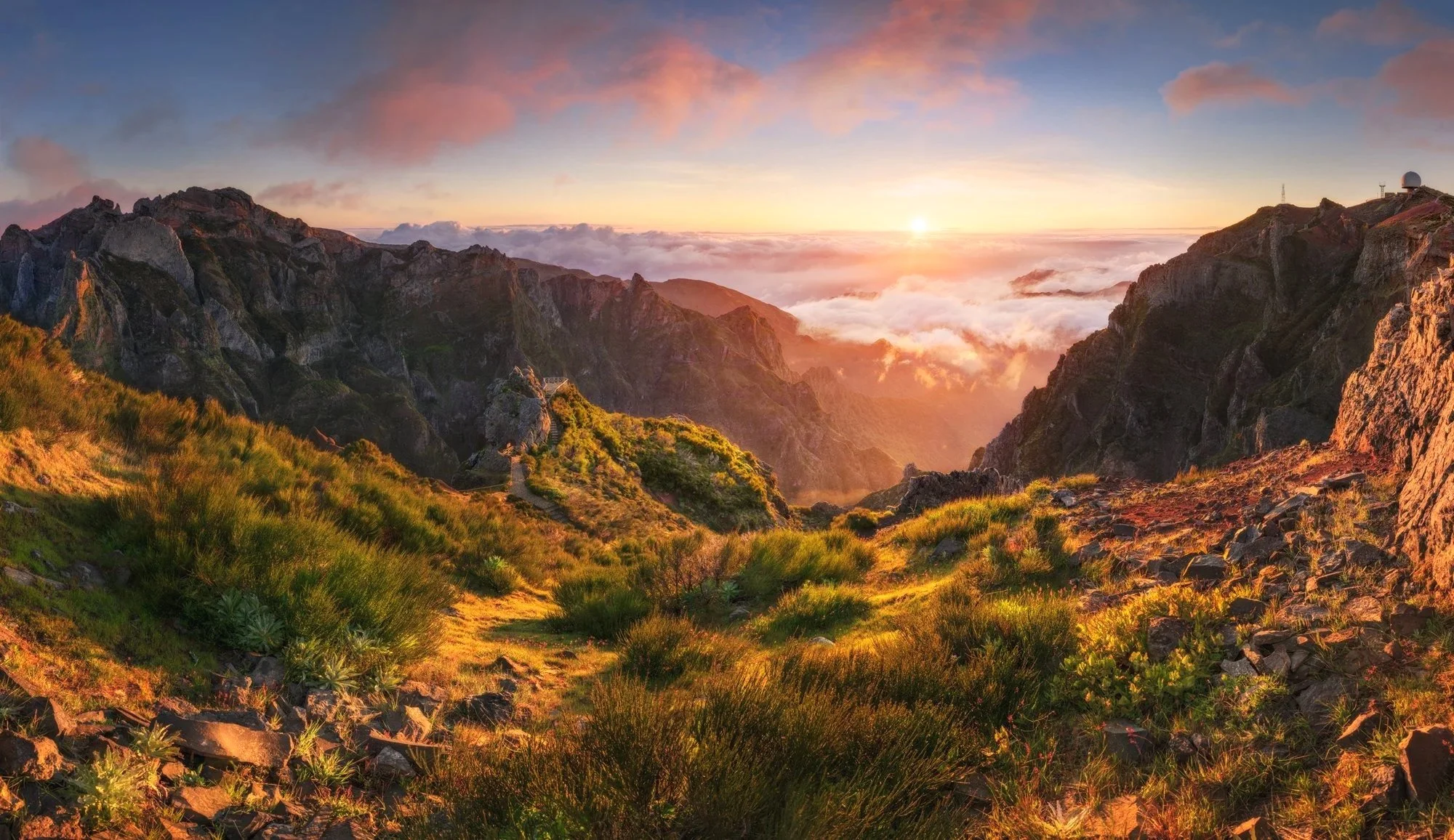
The Strategic Shift: Sunset and the Sea of Clouds If you want to experience the true power of this mountain, consider arriving at 17:00 instead. * The Crowd: By late afternoon, the crowds thin out significantly. You get the space to breathe and actually think about your composition.
The Light: The west-facing spires catch the last golden light far more dramatically than they do at dawn.
The Magic: This is the best time for the mar de nuvens (sea of clouds). When the Atlantic mist fills the valleys and the peaks float above a white ocean, Arieiro produces images that are unlike anything else in Europe. This phenomenon is most reliable in spring and often builds throughout the day, peaking at golden hour.
Strategic Positioning: Beyond the Railings Most people gravitate toward the "Stairway to Heaven" (the main stone path). While it’s a classic, it’s also the most crowded spot.
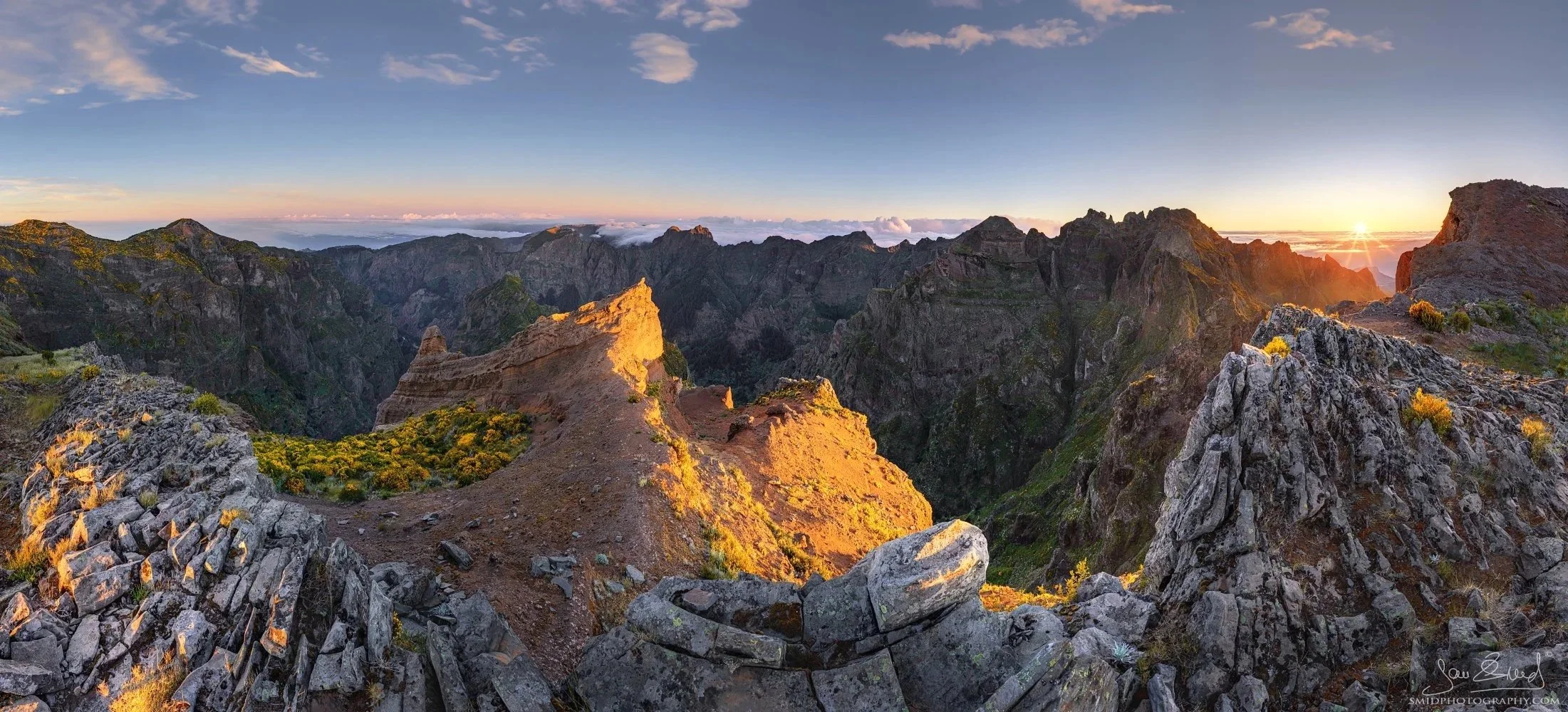
Side Perspectives: By moving away from the central hub, you can discover lateral views that frame the jagged basalt peaks in a way that feels far more grand and untouched. These side angles are where the true "fine-art" compositions are hidden.
The Sunrise Alternative: If you absolutely must have a sunrise, don't stand at the main viewpoint. Over the years, I’ve scouted specific spots on the surrounding ridges that offer a front-row seat to the first light without a single tourist in sight. These locations are reserved for my expedition groups—they require a bit more hiking, but the silence and the perspective are worth every step.
Astro-Photography: Above the World Arieiro is one of the best positions in Macaronesia for Milky Way photography, but it isn't "easy mode."
The Advantage: At 1,800 metres, you are often above the moisture, with zero light pollution to the south. In late spring, the galactic core rises cleanly over the Atlantic.
The Challenge: Finding a strong foreground and a balanced composition among the jagged rocks is notoriously difficult. It’s only when a low-level night inversion builds that the stars and the basalt formations truly align into a world-class image.
Veteran’s Practical Tip: If you insist on going for sunrise, be prepared to park 2km down the road and hike up in the dark just to find a spot. My advice? Skip the sunrise circus. Save your energy for a sunset session or a night shoot when the mountain finally regains its dignity.
Pico Ruivo: The Summit Everyone Hikes, and the Ridge Only We Find
At 1,862 metres, Pico Ruivo is the highest point on Madeira. The standard approach is the hike from Achada do Teixeira—a manageable 45-minute walk that has become much easier recently. A few years ago, the main access road was fully resurfaced, and the large parking lot at the trailhead makes it accessible for everyone. They even reopened the small café at the summit, which had been closed for years.
The Summit Reality: Great View, Zero Composition While the summit view is genuinely spectacular for a tourist, from a professional photography standpoint, the peak itself is a bit of a letdown. It is a rounded, heavily trodden-down area with zero interesting foregrounds. If you stand at the very top, your compositional options are practically non-existent.
Where the Real Images Are Hidden The strongest images of Pico Ruivo don't come from the summit, but from the trail leading up to it or from the smaller peaks rising above the path.
The Secret Ridge: Visible in several images in my Madeira gallery, there is a specific ridge that sits off the main path. It requires knowing exactly where to leave the trail, but the reward is immense. From there, you get a dramatic perspective looking back toward the summit tower with the Atlantic in the background. No tourists, no fences, no infrastructure—just raw basalt, light, and sky.
The Sunset Strategy: This ridge faces west, making it an absolute powerhouse at sunset. The light falls directly onto the massive rock faces from behind you, creating a three-dimensional depth that you simply can't find elsewhere. While the main trail is busy during the day, we are almost always completely alone at our specific spots for the golden hour.
The Galactic Core and Inversions Pico Ruivo is also an exceptional location for Milky Way photography. When the low-level inversion (the sea of clouds) blankets the island, it cuts off all light pollution from the villages below. At 1,800+ metres, you are standing in total darkness with the galactic core rising over the jagged silhouettes of the central massif. Finding a foreground here is tricky, but when it aligns, it is world-class.
Master QEP Insider Tip: I share the precise coordinates of the "Secret Ridge" with my expedition participants only. It requires an additional 20 minutes of walking beyond the main summit area, but it is the difference between a generic postcard and a fine-art masterpiece.
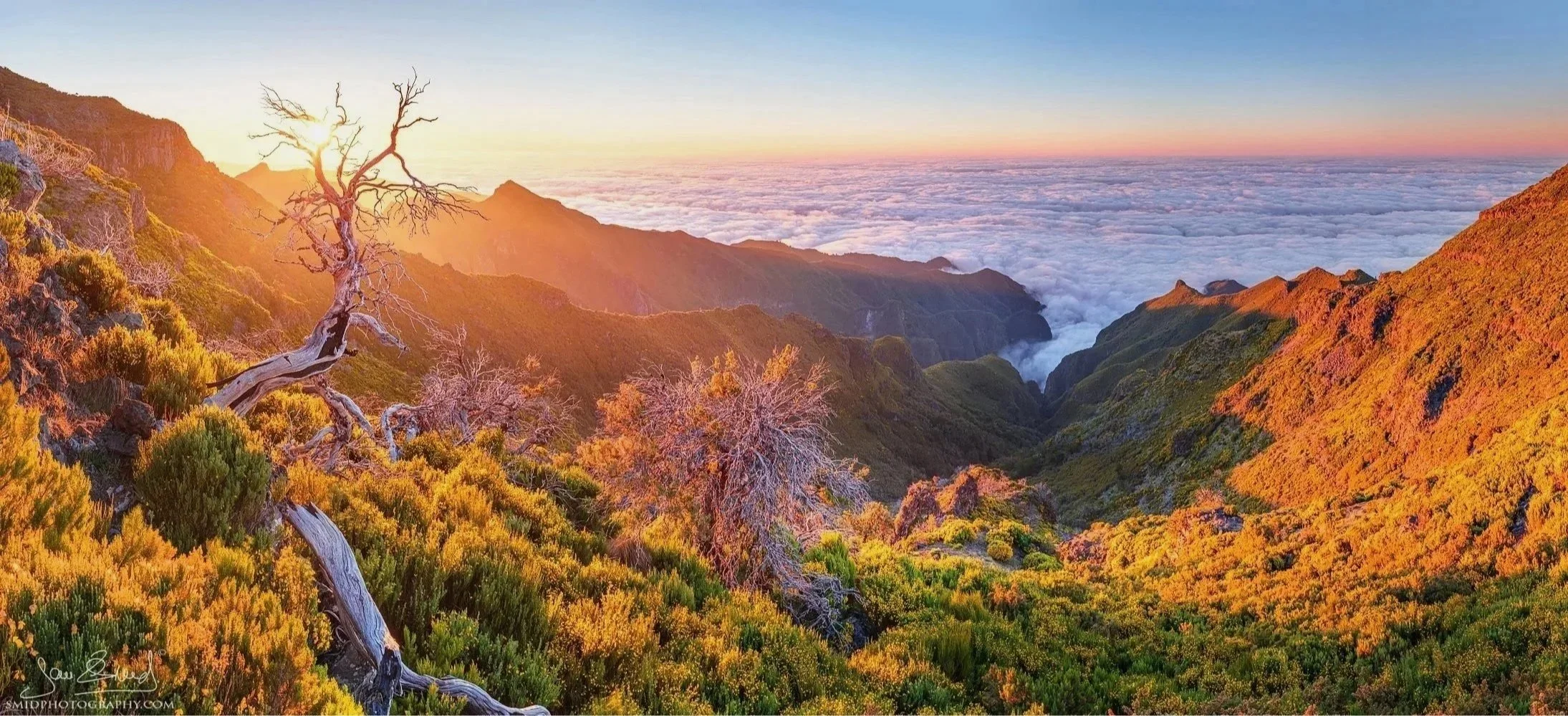
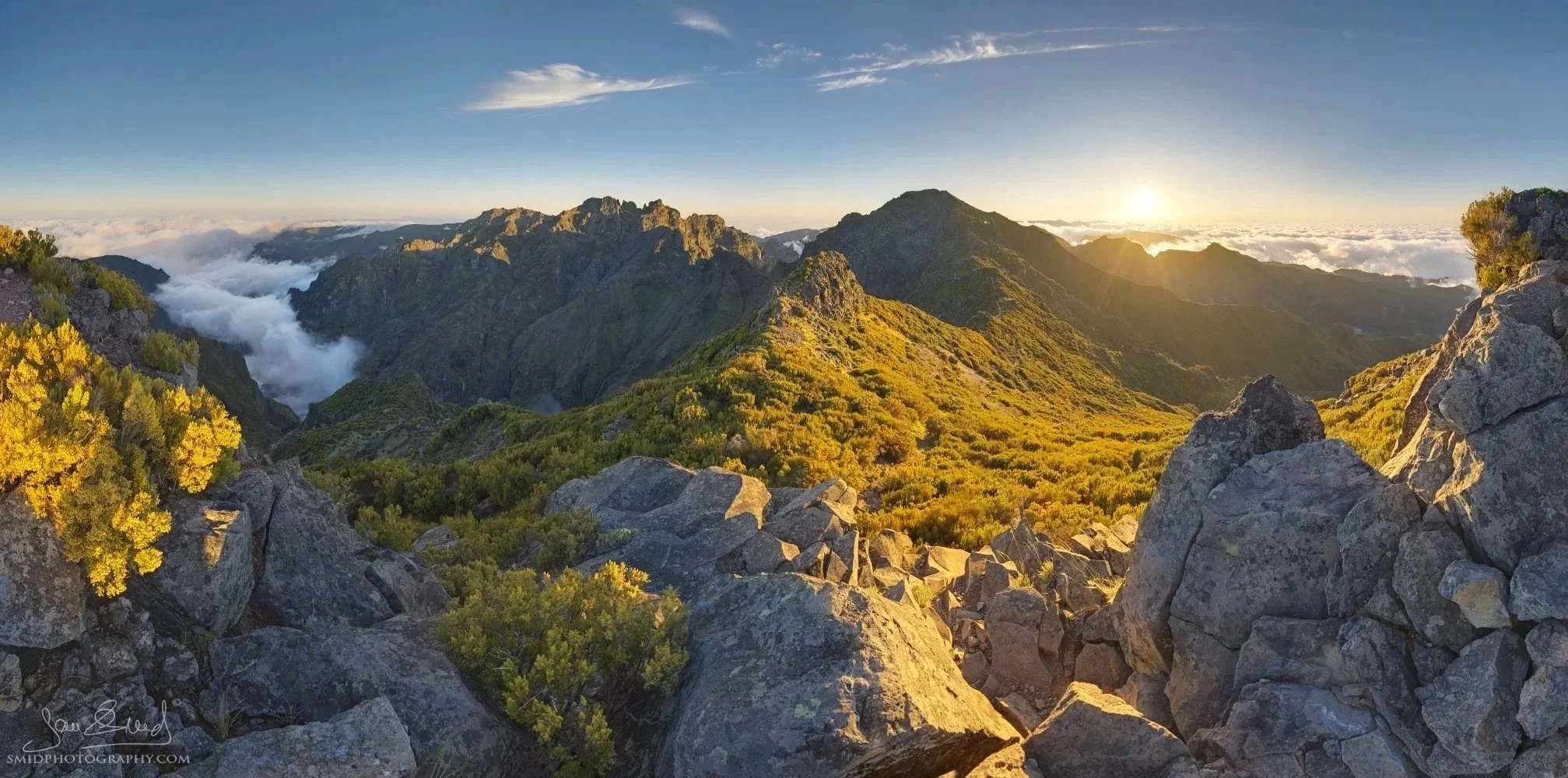
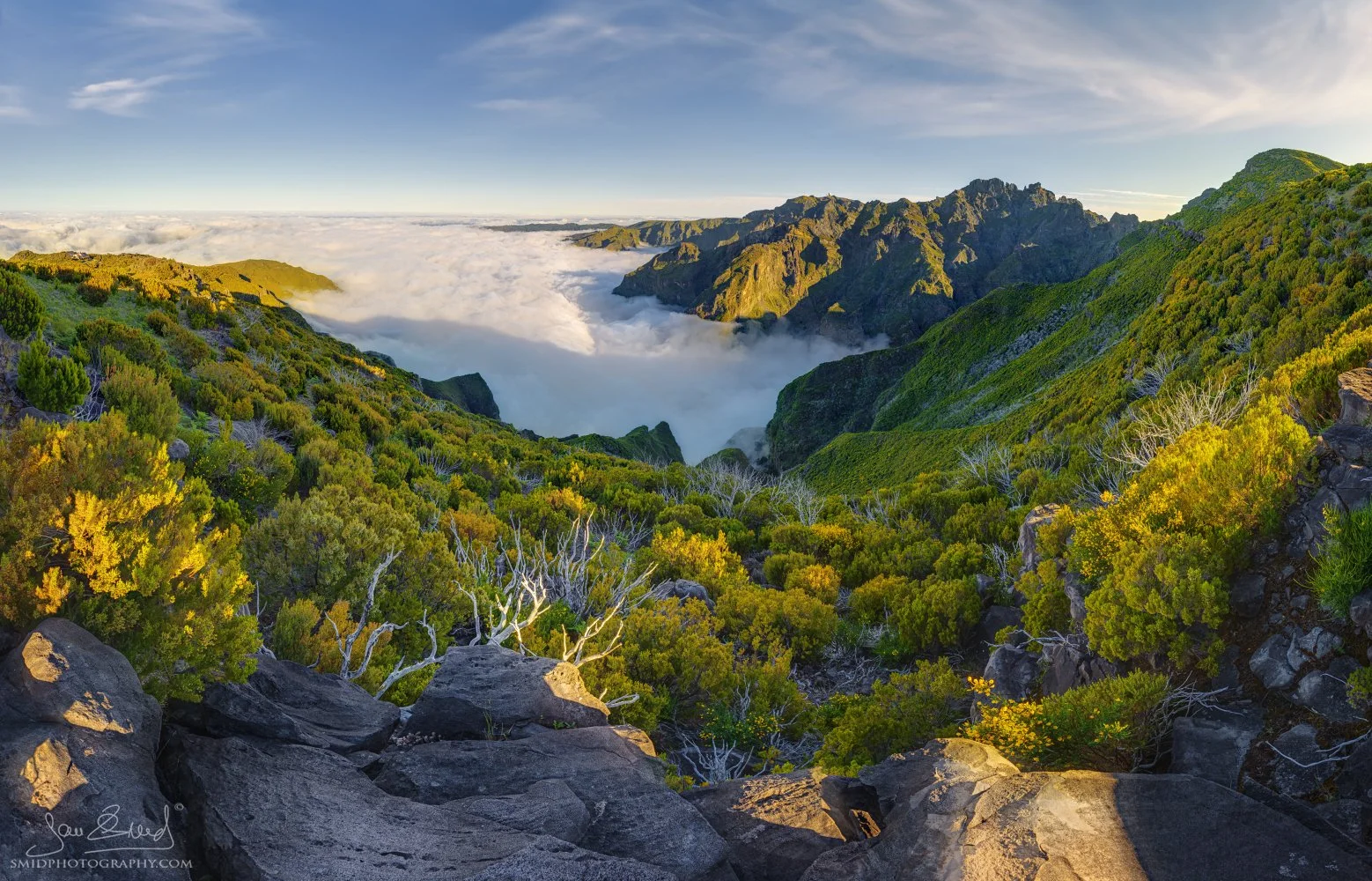
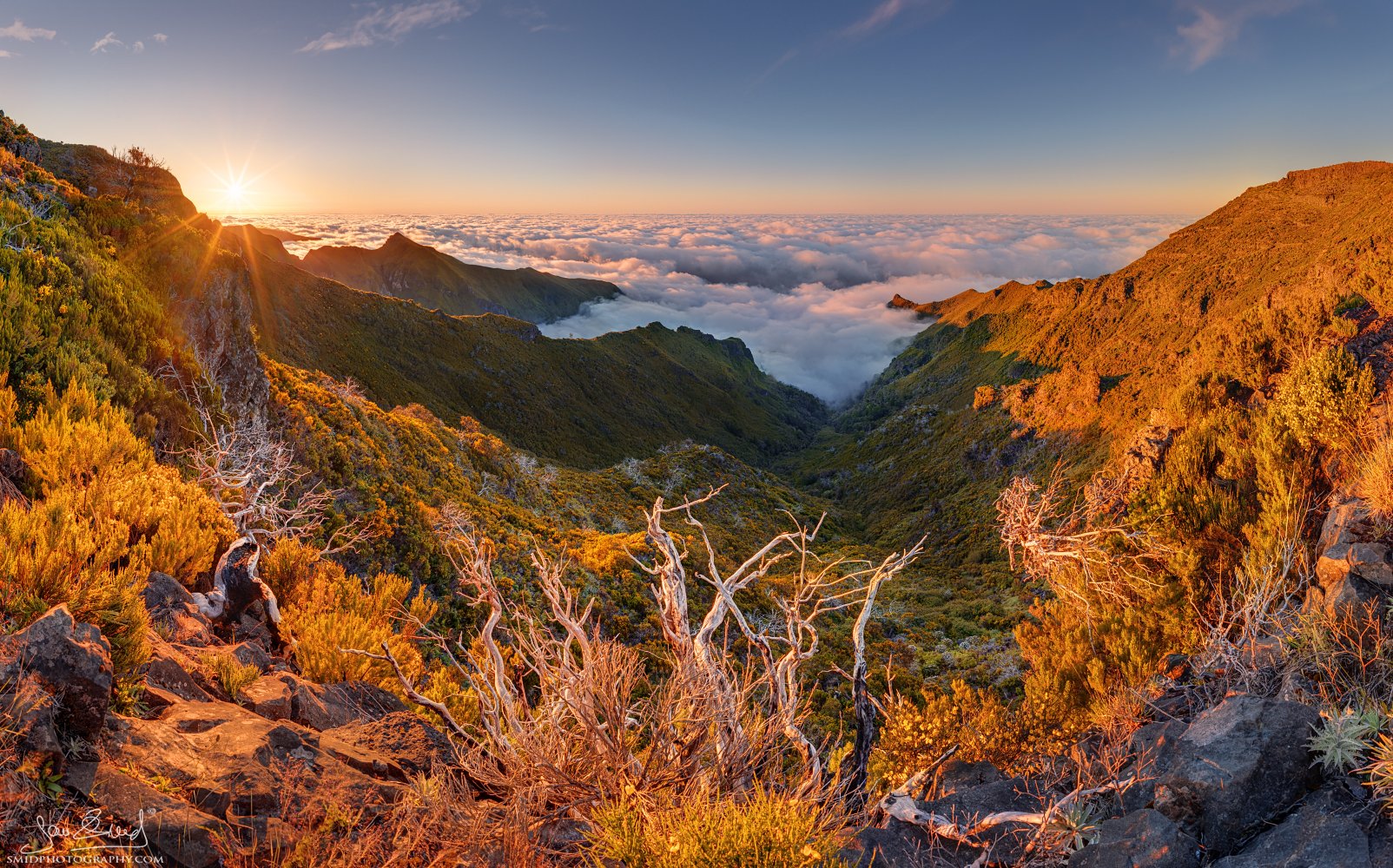
Bica da Cana: The Inversion Viewpoint
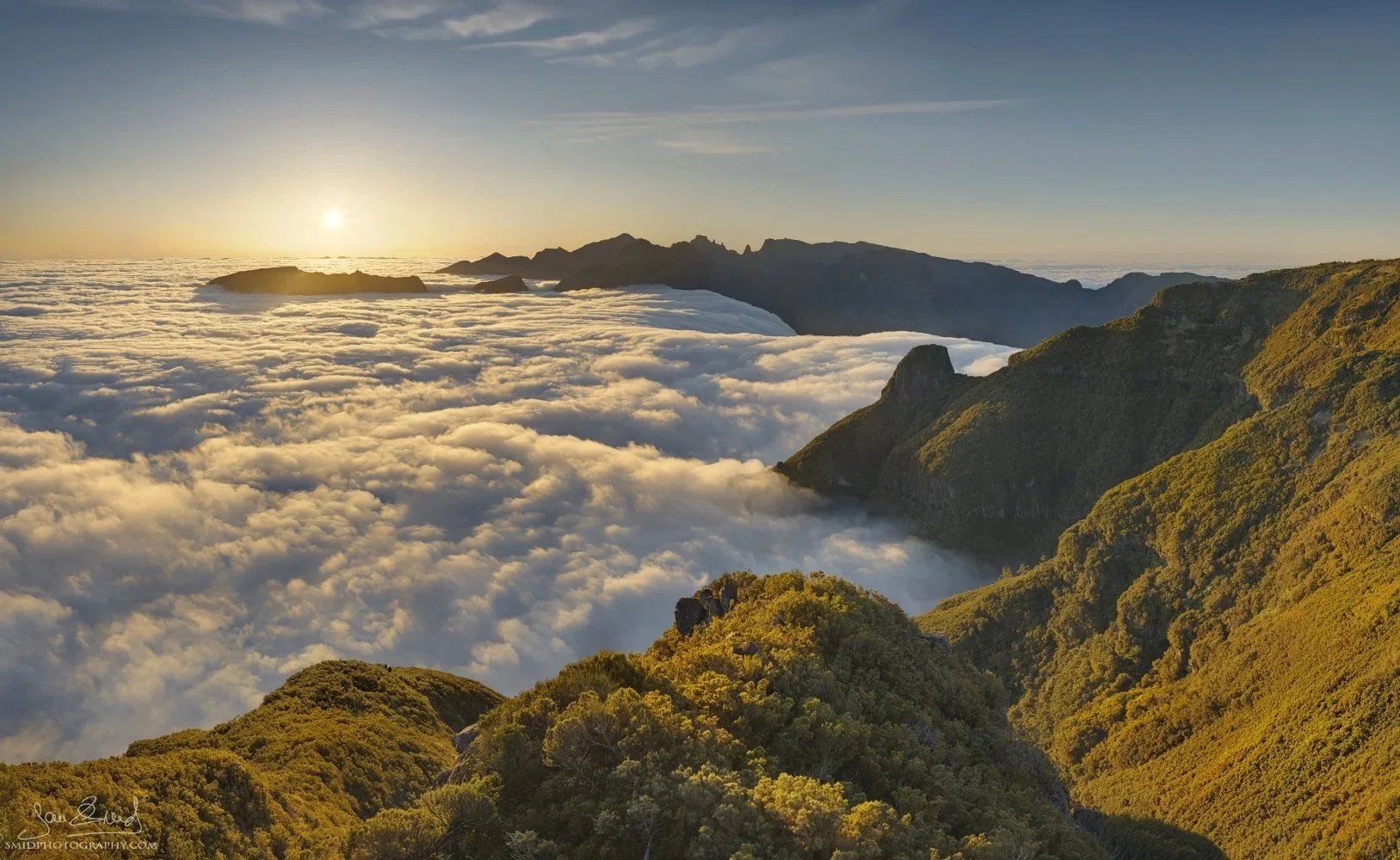
At 1,560 metres on the central plateau, Bica da Cana is one of the best positions on the island for photographing the mar de nuvens — the cloud inversion. But let’s be honest about the reality of this location: while the view is world-class, the experience can be a challenge.
The Sunrise Reality Check We were here for sunrise, and you should expect to share the view with dozens of other people. It is not a quiet sanctuary. Between the crowds and the technical difficulty of the terrain, getting a clean shot is far from easy. The main issue for photographers is the foreground—it’s filled with messy, unattractive shrubs that can easily ruin a composition.
To overcome this, you need a different strategy. I rarely use a wide-angle lens here. My image "Above the Silent Sea of Clouds" (seen below) was shot as a multi-row panorama using a 50mm lens. By using a longer focal length, I was able to compress the layers of the central massif and the rolling mist while completely cutting out the messy foreground vegetation.
The Stepping Stone to the "Hidden Gem" Today, I visit the main Bica da Cana viewpoint only exceptionally. For me, its greatest value was that it led us to discover a far superior "super spot" nearby.
The Secret Location: This hidden area brings us much closer to the "cloud waterfall," where the inversion pours over the ridges.
The Recovery: During our 2025 expedition, this spot was struggling—it was shot immediately after a fire, and the landscape lacked its usual harmony.
2026 & 2027: Nature is recovering fast. For our upcoming expeditions, this secret location will be the absolute highlight. It offers everything the main viewpoint lacks: total silence, a front-row seat to the inversion, and a clean, powerful composition that nobody else has in their portfolio.
Master QEP Tip: If you find yourself at the main viewpoint, stop trying to go wide. Switch to a 50mm or 85mm lens, look for the peaks floating above the mist, and shoot a panorama. It is the only way to transform this busy, messy location into a fine-art masterpiece.
Fanal: The Fog Factory and the Ancient Laurisilva
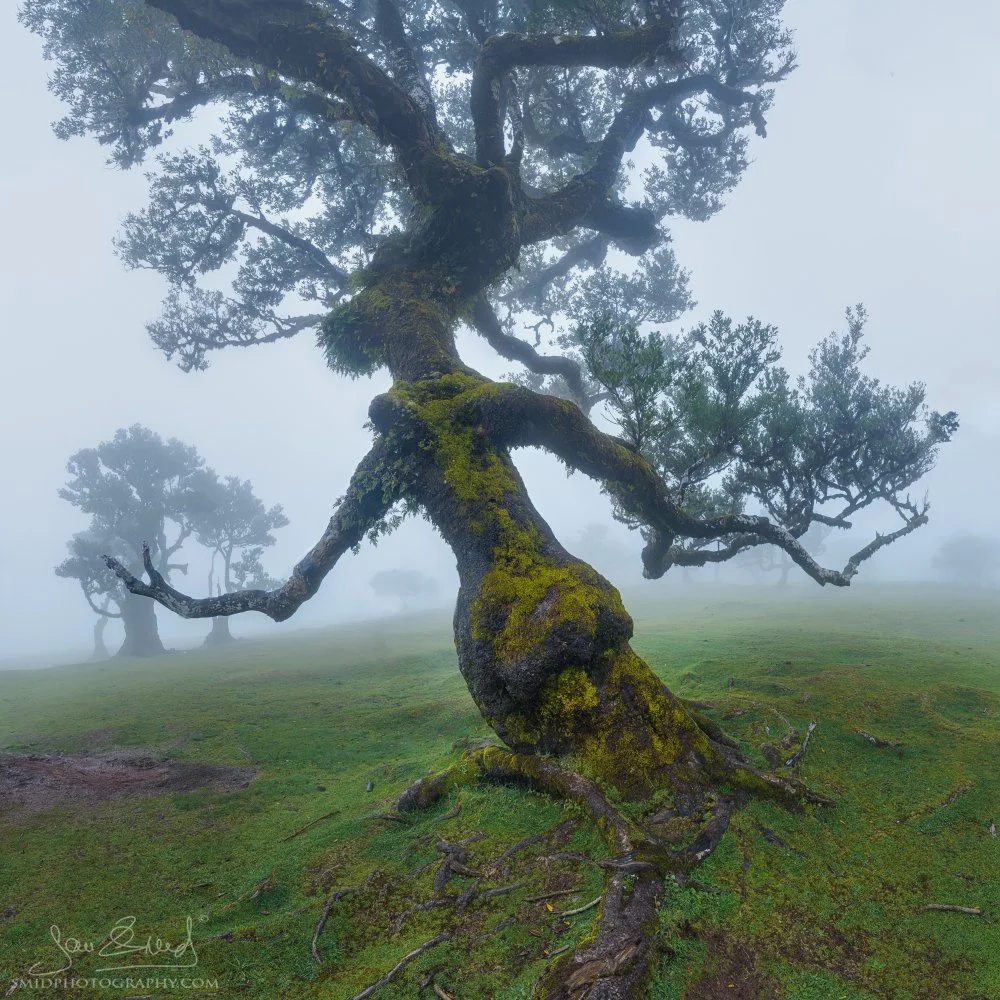
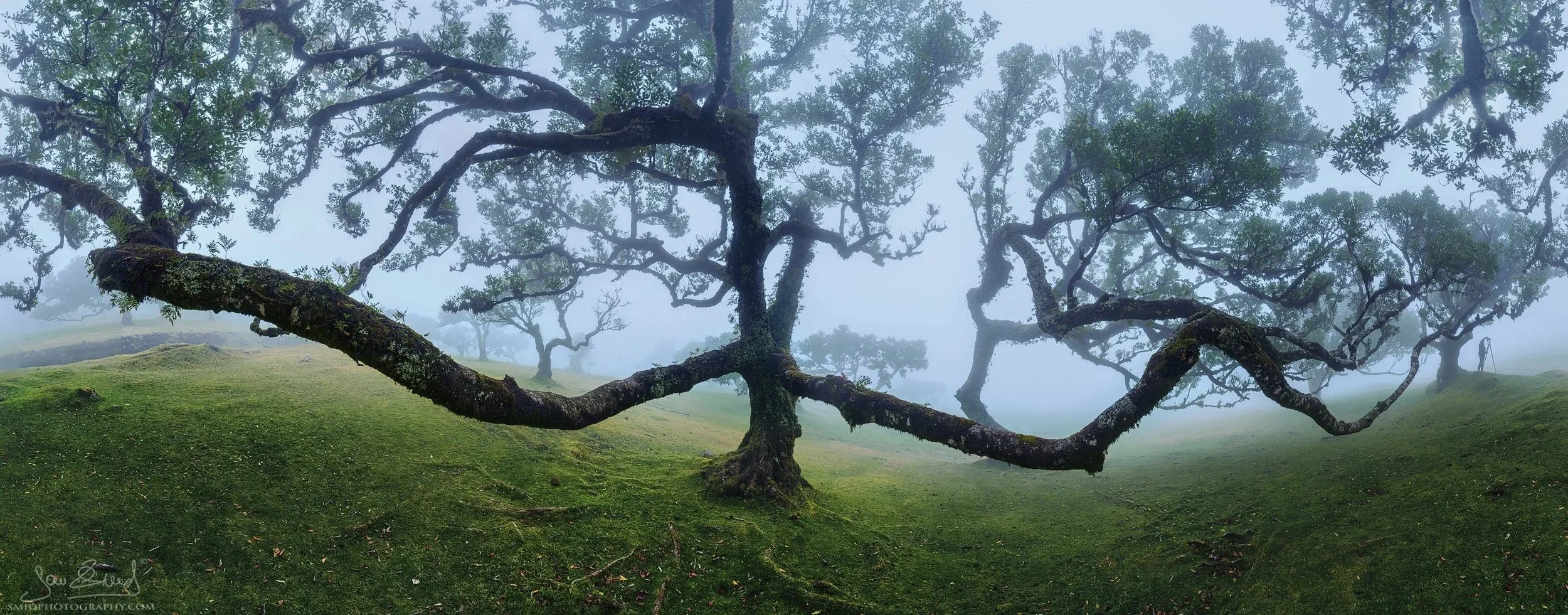
Fanal is probably the most iconic location on Madeira. It is an ancient laurel forest that looks like a film set from Jurassic Park or Lord of the Rings. When the fog rolls in from the north, the centuries-old, twisted trees create shapes that are simply nowhere else on Earth.
Go Ultra-Wide or Go Home Contrary to what many generic guides suggest, ultra-wide lenses are your best friend here. To capture the sheer drama of these massive, distorted trunks and how they interact with the mist and the surrounding slopes, you need to get close and stay wide. It allows you to emphasize the surreal, skeletal shapes of the trees against the white void of the fog. My image "The Ent of Fanal Forest" is a perfect example—a wide-angle perspective that gives the tree a towering, sentient character.
The Early Bird Reality Fanal has become a victim of its own beauty. There are two main parking lots, and by late morning, both are usually overflowing.
Timing: You must be here at the crack of dawn.
The Crowd Factor: Even though the fog helps hide people, you’ll still find tourists in bright jackets wandering into your frame, ruining the "prehistoric" vibe. If you want a clean composition without having to Photoshop out twenty people, you need to be set up before the first tourist cars and buses arrive.
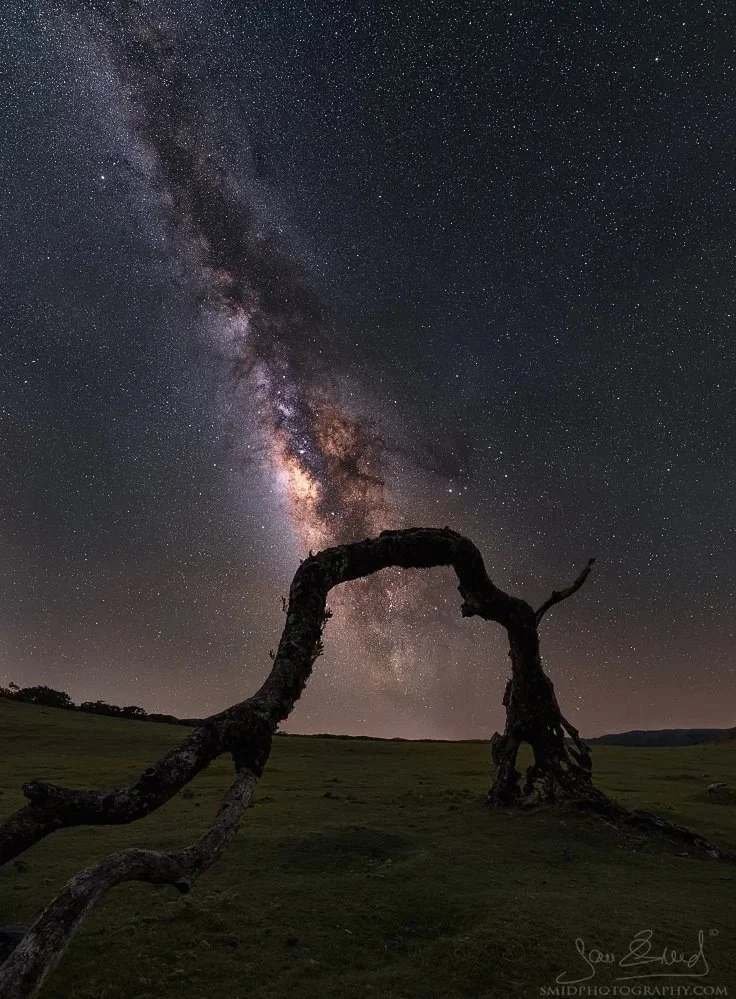
The Night Paradox: Hunting the Milky Way Fanal is also one of my favorite spots for Milky Way photography, but it presents a unique challenge.
The Fog Struggle: While we pray for fog during the day to get that moody atmosphere, we need the exact opposite at night. For stars, we need perfectly clear skies and, crucially, zero wind.
Plan B: If the fog settles into the forest at night, you’re blinded. In those cases, I lead my groups higher up onto the surrounding ridges. The compositions might not be as legendary as the ancient trees, but it’s the only way to get above the moisture and capture the galactic core.
Master QEP Insider Tip: Don't just stand by the road. The forest is deep, and some of the most "character-rich" trees are hidden further in the valleys. But remember: in thick fog, it’s incredibly easy to lose your orientation as well as your best composition. Use a GPS or a tracking app, because once the mist closes in, every tree looks exactly the same.

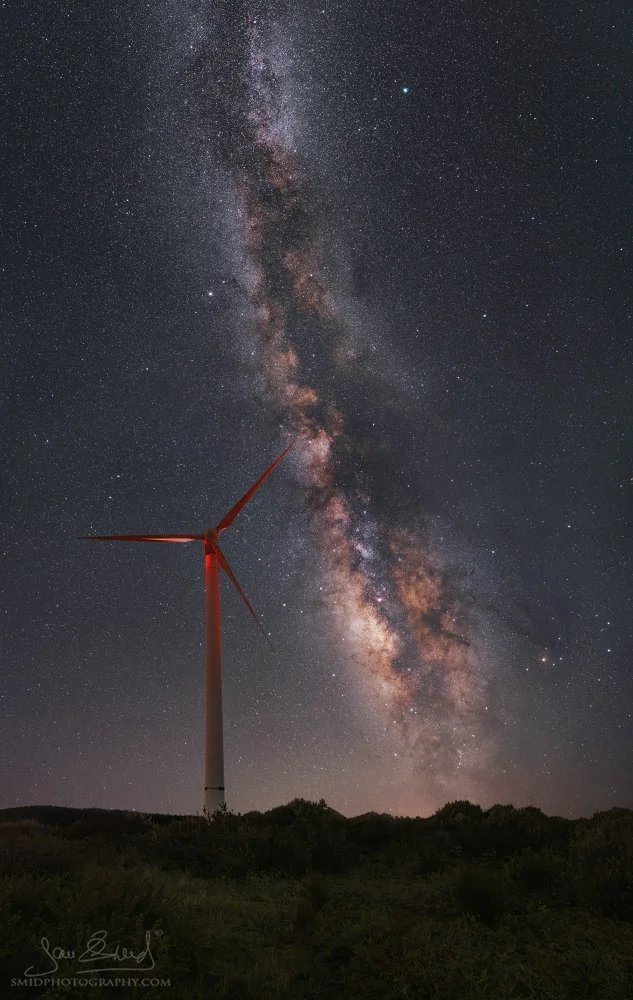
Ribeira da Janela: The North Coast Masterclass
The sea stacks at Ribeira da Janela are a monument to the raw power of the Atlantic. These dramatic basalt columns rising from the surf are a "must-shoot," but don't let their popularity fool you—getting a world-class image here requires precise timing and a deep understanding of the coastal light.
Why Sunrise Wins (and Sunset Fails) Many photographers try to shoot Janela at sunset, but as an insider, I can tell you: it’s a compromise. During the golden hour at sunset, the sun disappears behind the massive cliffs far too early. You’re left with just a few minutes where the very tips of the stacks glow before the entire cove falls into a flat, uninspiring shadow.
Sunrise is the king here. The light comes from the East, raking across the surface of the water at a shallow angle and illuminating the textures of the basalt columns and the pebble beach. It creates a three-dimensional depth that sunset simply cannot provide.
The Atlantic Dance: Tide and Timing Success at Janela is dictated by the tide.
High Tide: The waves crash against the base of the stacks, creating immense energy. This is the time for long exposures and ND filters to create that ethereal "sea mist" effect.
Low Tide: The receding water reveals rock pools and intricate textures in the foreground. It allows for a more structural, foreground-heavy composition.
The Veteran’s Reward Photography on the north coast is exhausting—the salt spray is constant, and the wind can be brutal. That’s why we have our ritual. Just before the main parking lot on the right side, there is a modest, unassuming café. It doesn't look like much from the outside, but they serve some of the best coffee on the island. We stop there after every morning session to warm up and review our shots. It’s these small local secrets that turn a photo trip into a real Madeira experience.
Master QEP Insider Tip: Bring plenty of lens cloths. The salt spray at Janela is relentless. I teach my expedition groups the "shield and fire" technique—keeping the lens covered until the exact second the wave hits the right spot. It’s the only way to get a tack-sharp shot without salt streaks.
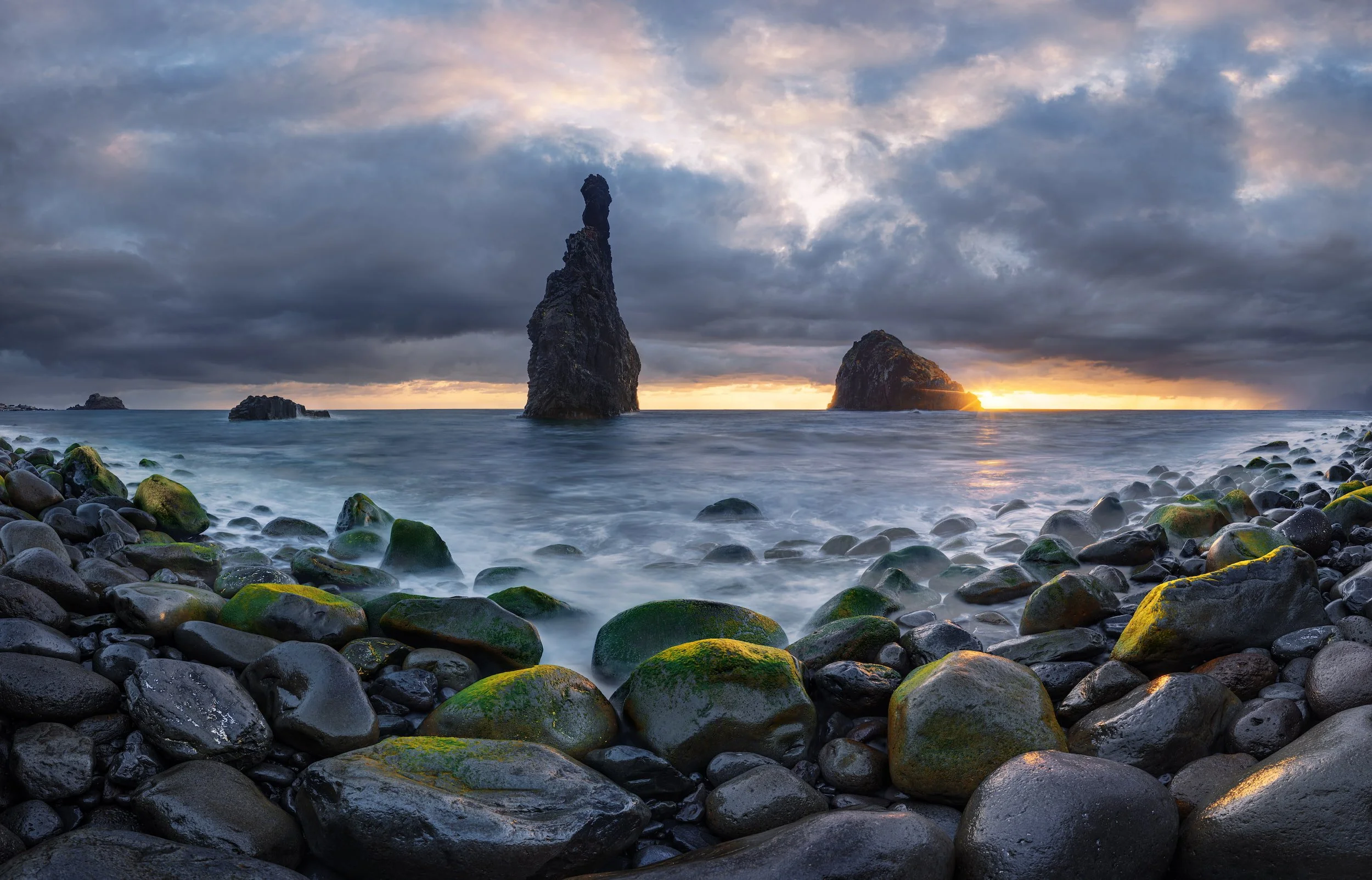
Experience the Atmosphere: Behind the Scenes in Madeira
To truly understand why Madeira is known as the "Vertical Garden" of the Atlantic and to see our professional workflow in action, watch the backstage films below.
The first video captures the raw energy of our Spring photography expeditions—the blooming mountain ridges, the early morning light in the ancient forests, and the hands-on atmosphere of our workshops. The second video blends cinematic drone footage with ground perspectives to showcase the massive scale of the central massif and the legendary sea of clouds that defines our high-altitude sessions. This is the island as we see it: vertical, volcanic, and far from the crowds.
Ponta de São Lourenço: The Sahara of the Atlantic
The easternmost point of Madeira is a protected nature reserve and a complete geological departure from the rest of the island. I call this place "The Sahara." Due to the relentless winds, the landscape remains bone-dry and beautifully desolate, a stark contrast to the lush green Levadas.
Breaking the Sunrise Tradition Ponta de São Lourenço is a magnet for photographers at sunrise. Every morning, you’ll find crowds gathered at the standard viewpoints, shooting East into the rising sun over the ocean. It’s the "textbook" shot, and by mid-morning, the trail is swarming with hundreds of tourists. We do the exact opposite.
The Sunset Advantage: Shooting West While the masses are fighting for space at dawn, I lead my expeditions here for sunset.
The Strategy: Instead of facing the empty ocean, we turn around and shoot West, back toward the main island.
The Light: By shooting into the setting sun as it drops behind the jagged central massif, we create powerful and high-contrast compositions that most people miss entirely.
The Experience: While the sunrise spots are a circus, at sunset, we are often completely alone on our specific spots. This is how the images in my "Dragon's Tooth" was captured—facing the light.
Master QEP Insider Tip: The Solitary Swim The "Sahara" can be punishingly hot during the day. Here is my personal ritual: about 10 minutes from the start of the trail, there are stairs leading down to the right. They take you to a small, hidden beach. While the crowds are sweating on the ridges above, we head down for a swim. It’s almost guaranteed solitude and the perfect way to reset before the evening light begins.
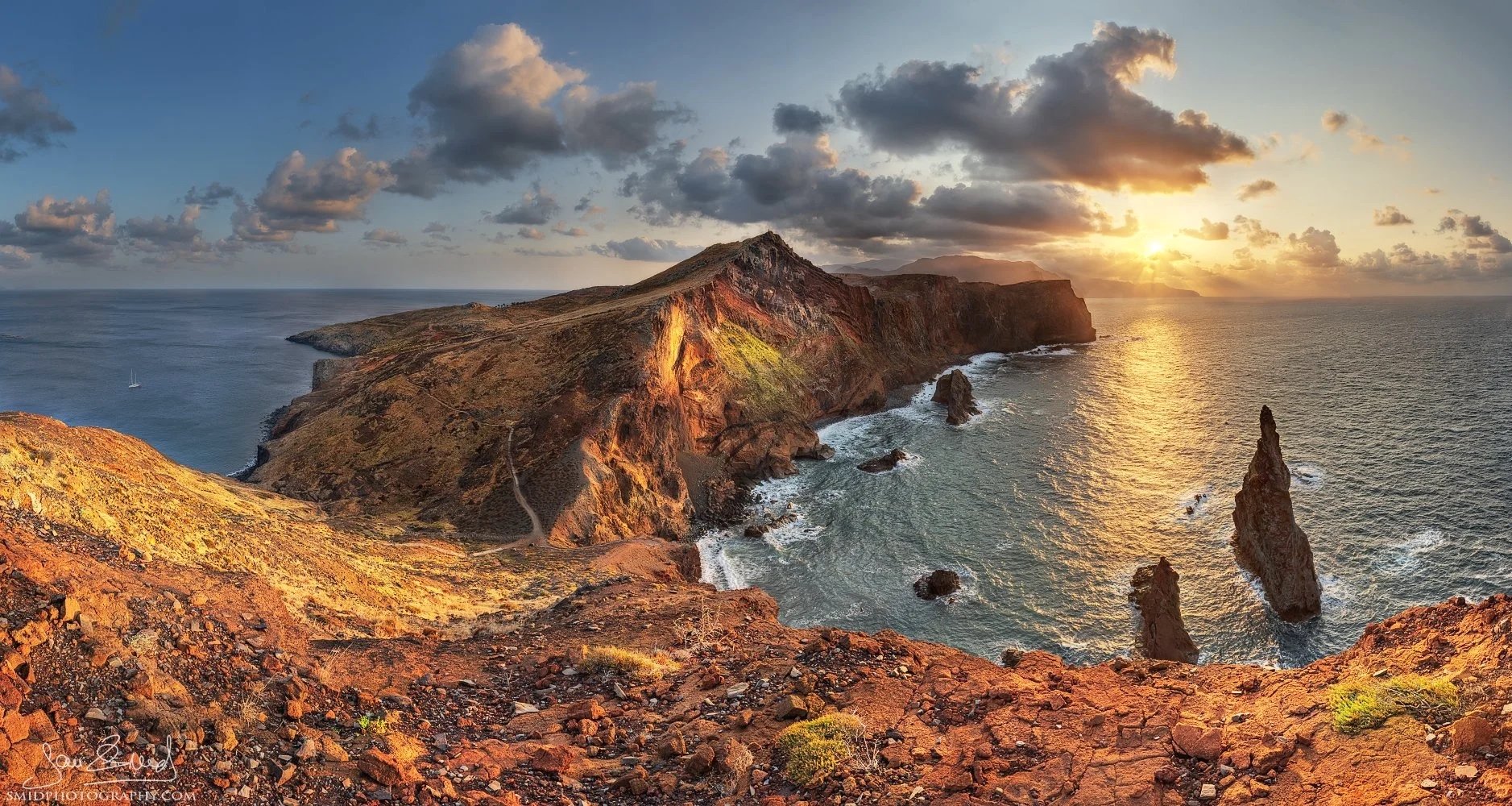
Madeira Logistics: Where to Relax and Where to Really Shoot
Every guidebook will point you toward Porto Moniz and Cabo Girão. And they should—as a traveler, these places are iconic. But as a professional photographer, my assessment is different: these are locations for your soul and your drone, not necessarily for your best ground-level compositions.
Porto Moniz & Seixal: The Art of the Break Porto Moniz is a stunning system of volcanic pools, and honestly, it’s a perfect place for a "day off."
The Vibe: The seaside atmosphere is brilliant, and the local restaurants are excellent. It’s the perfect spot to grab a long lunch, have a proper coffee, and just enjoy the island.
Swimming Tip: Porto Moniz and nearby Seixal offer incredible swimming thanks to their famous semi-natural pools.
The Photo Strategy: From the ground, these spots are busy and compositionally flat. If you want a killer shot, use a drone. The geometry of the lava rocks against the Atlantic blue is pure gold from the air. Otherwise, leave the camera in the bag and just enjoy the water.
Cabo Girão and the Southern Cliffs The South and West coasts are defined by massive, vertical cliffs. Cabo Girão, with its glass skywalk, is a spectacular overlook.
The Reality Check: While it’s impressive to stand on, it’s a single-angle location with tourist infrastructure everywhere. For regular landscape photography, you’ll struggle to find a clean foreground.
Drone Territory: Like most of the steep southern coastline, this is prime territory for cinematic drone work, but rarely worth a 3-hour sunset session on the ground.
The Exclusive Locations 2026 & 2027 Expeditions: The reason people join my expeditions is that we don’t spend our golden hours at glass viewpoints. We focus on a network of hidden seascapes and mountain ridges that offer the depth and drama a Master QEP demands.
Scouting: During our last scouting sessions, we found several “super-compositions” that are completely off the radar. We’ll return to these locations again this year and during future expeditions.
Below are two examples of the kind of secret compositions we focus on—far from the tourist crowds of the South coast.
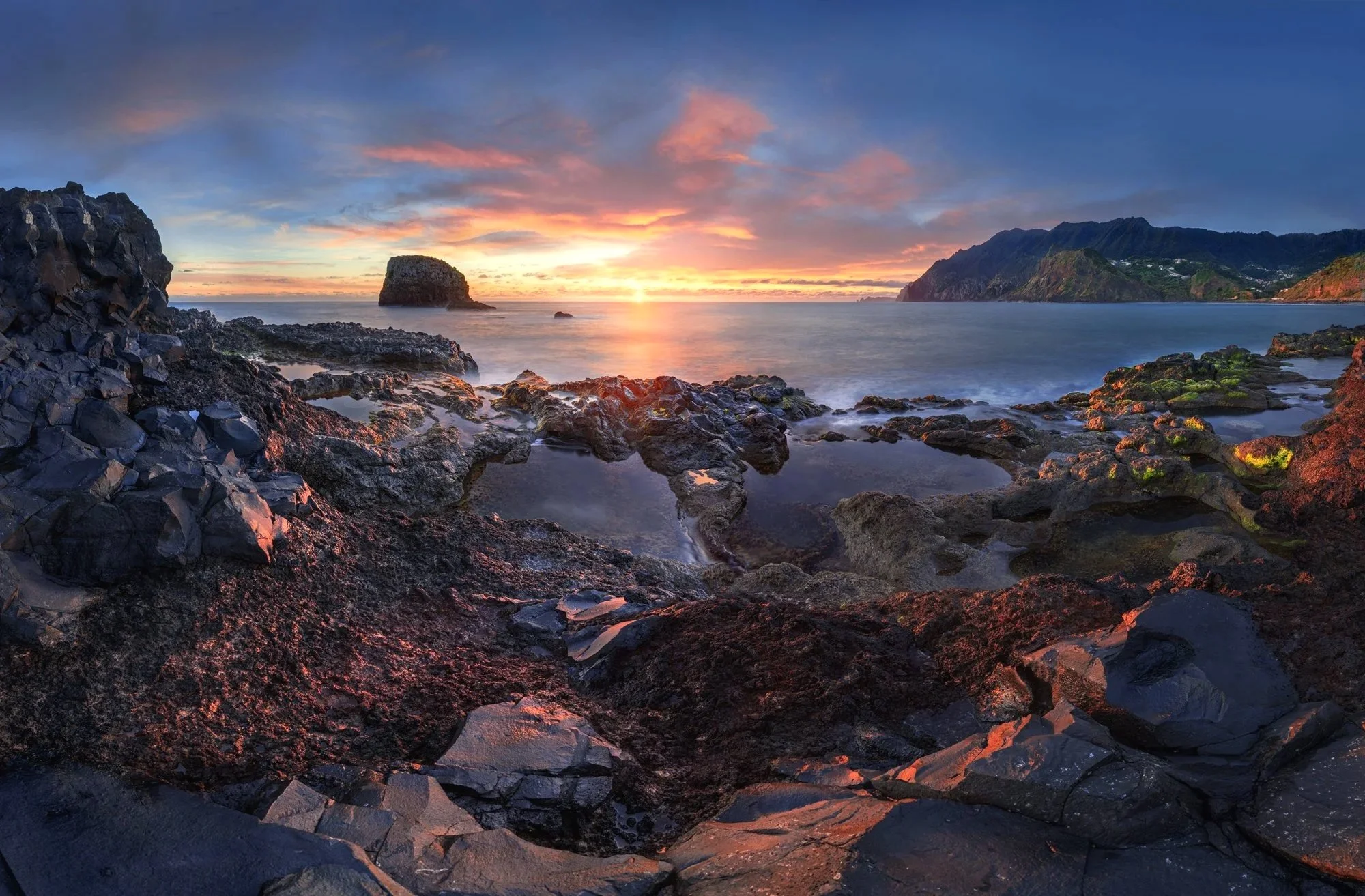
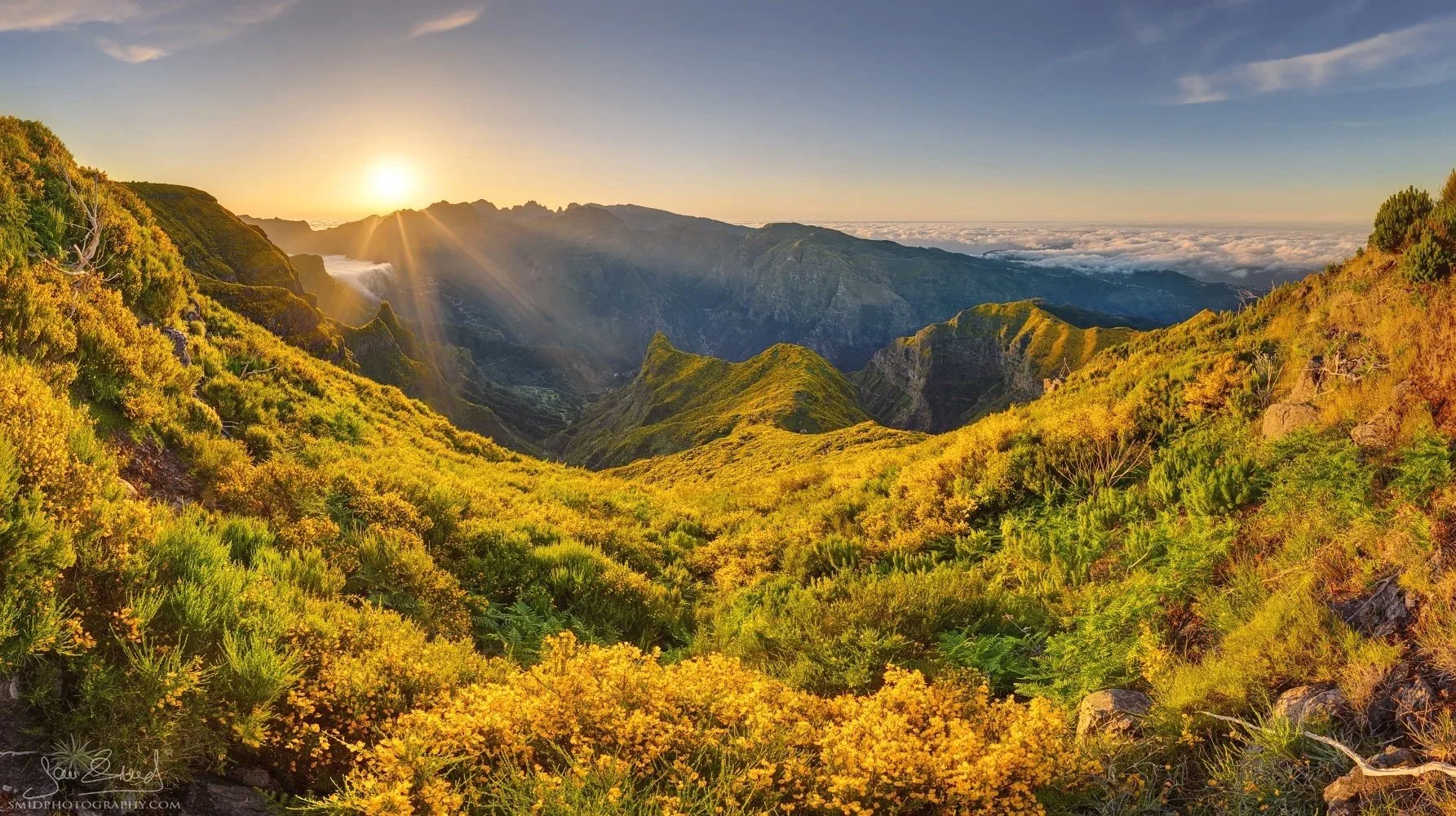
Essential Gear for Madeira: Mastering the Vertical Garden
Madeira is a visual masterpiece, but it’s technically brutal. To bring home world-class portfolio pieces rather than just "tourist snapshots," your kit needs to be ready for the island’s raw, unpredictable character.
Lenses: From Epic Vistas to Ghostly Layers
Ultra-wide (14–24mm equivalent): Your primary weapon. You need this to sell the sheer scale of the São Lourenço cliffs and to get intimately close to the gnarled, prehistoric trees in Fanal.
Short Telephoto (70–200mm): This is the "secret sauce" for the mountains. It allows you to compress the endless layers of the central massif and isolate solitary ancient trees emerging from the morning mist.
Filters: Taming the Atlantic Glare
Circular Polarizer (CPL): A non-negotiable for the coast. It’s the only way to kill the Atlantic glare and reveal the deep, gemstone-blue tones of the water.
ND Filters (6 and 10 stops): Mandatory for seascape. You need these to transform the crashing surf into that ethereal "sea mist" that separates a pro shot from a snap.
Tripod: Weight is Your Ally
Leave the lightweight travel tripods at home. The wind on the ridges of Arieiro and Ruivo will take a light setup and toss it into the valley. You need something heavy and rock-solid that bites into the volcanic soil.
Weather Protection: Summit Survival
It might be t-shirt weather at the beach, but at 1,800 metres, it’s a different world. A windproof mid-layer and a high-performance rain shell are essential for those long, freezing waits for the first light.
Join a Madeira Photo Expedition
This guide only scratches the surface of the accessible locations. The images that have defined my portfolio over eight years of Madeira expeditions were captured at "secret" spots I share only with my participants in the field.
Madeira Spring Photo Expedition — May 23–31, 2026
Nine days during peak spring conditions: cloud inversions, wildflower blooms, and the Milky Way core over the high summits.
Status: FINAL SPOT REMAINING!
Private luxury villa, maximum 6 photographers, 3 professional instructors.
Fully adaptive itinerary built on real-time scouting and local weather insight.
Madeira Spring Photo Expedition — 2027
The same elite program, one year later. Early registration is now open—every previous Madeira expedition has sold out months in advance.
Browse the full Madeira gallery to see the results of our specialized approach.
About the Author
Jan Smid is a world-renowned landscape photographer, Master QEP, and Official ZEISS Ambassador with over 300 international awards. For more than ten years, Jan has led professional photo expeditions to Madeira, mastering its dramatic volcanic landscapes and the unpredictable "sea of clouds" microclimates.
Renowned for his technical dominance and panoramic mastery, he helps photographers capture the extraordinary through elite Madeira photo tours, online masterclasses, and private mentoring. Ready to master the light of the Vertical Garden? Join Jan on his next expedition.
Pokud jste fotograf z ČR nebo SR a chcete fotografovat polární záři v profesionálních podmínkách, navštivte naše fotoexpedice — Lofoty i Aljaška nabízejí ideální podmínky pro focení aurory borealis.
Frequently Asked Questions
-
Spring — April through early June — is the strongest season for landscape photography. Cloud inversions are most frequent, the island is green from winter rain, wildflowers are at peak bloom, and the Milky Way is visible from the high peaks before midnight. Autumn is also strong. Summer is drier and less dramatic at altitude.
-
Most strong photography locations on Madeira are accessible with moderate fitness. The summit hikes to Pico Ruivo and the Arieiro ridge require reasonable walking ability but no technical climbing. Many of the best coastal and forest locations involve short walks from the road.
-
Watch the pressure differential between the coast and the plateau. When the south coast is overcast or foggy and the plateau forecast shows clearing, drive up. Local weather apps often underestimate inversion frequency — direct observation is more reliable than forecasts at altitude.
-
Yes — Pico do Arieiro is one of the best Milky Way locations in Europe. The galactic core is visible from approximately March through October, with peak visibility in May and June when it rises early enough to combine with last light. Clear nights are most frequent in the dry season.
-