
🇳🇦 Why Namibia is a Demanding Photography Destination
Namibia Photography Expedition — Where Photography Is Stripped to Its Core
Namibia is often described as beautiful. That description is misleading. Beauty suggests something that works effortlessly. Namibia does not. Namibia is honest.
Here, there is no visual clutter to hide behind, no chaos to rescue a weak frame, and no dramatic weather doing the work for you. Light is clean. Space is vast. Shapes are simple. If your composition is even slightly off, Namibia exposes it instantly.
This is exactly why Namibia has become one of the most valuable destinations in the world for photographers who want to grow — not just collect locations, but actually improve how they see, decide and compose in the field.
🧭 Namibia Is Not About Locations — It’s About Decisions
Most photographic destinations reward photographers simply for showing up. Namibia doesn’t.
The landscape is open, minimal and unforgiving. Subjects are often small. Distances are deceptive. Light moves slowly, but relentlessly. Every scene forces you to make conscious decisions: what truly matters in the frame, how much space is intentional, when to simplify instead of adding elements, and when not to press the shutter at all.
This constant decision-making is what makes Namibia such a powerful training ground for photographers. It strips photography back to fundamentals — composition, scale, balance, timing and intent. There is nowhere to hide weak structure, and no shortcut to strong images.
This philosophy is the foundation of the Namibia Desert, Dunes & Night Photo Expedition 2027.
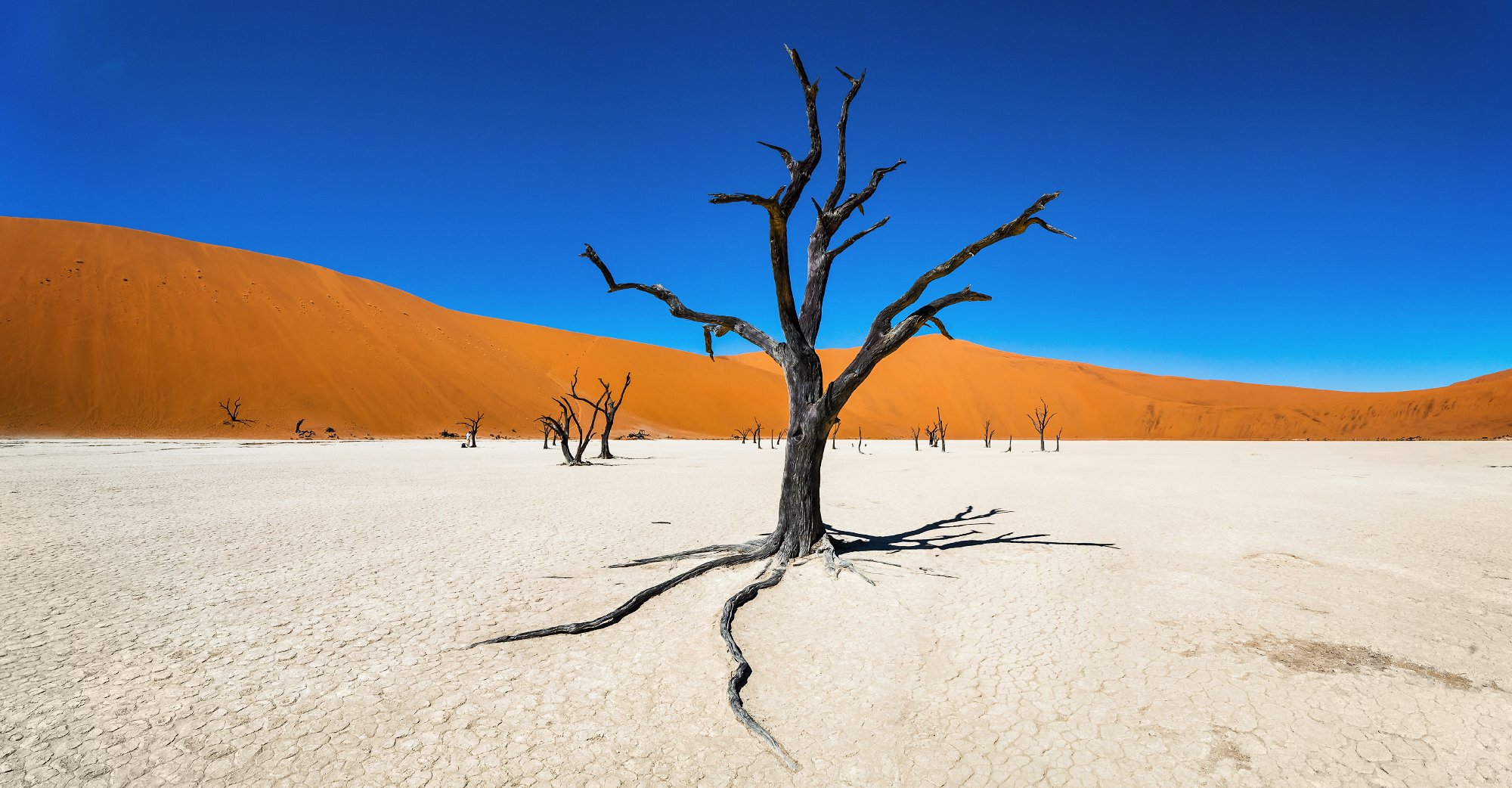
🏜️ Desert & Dune Photography — Learning to Work With Scale
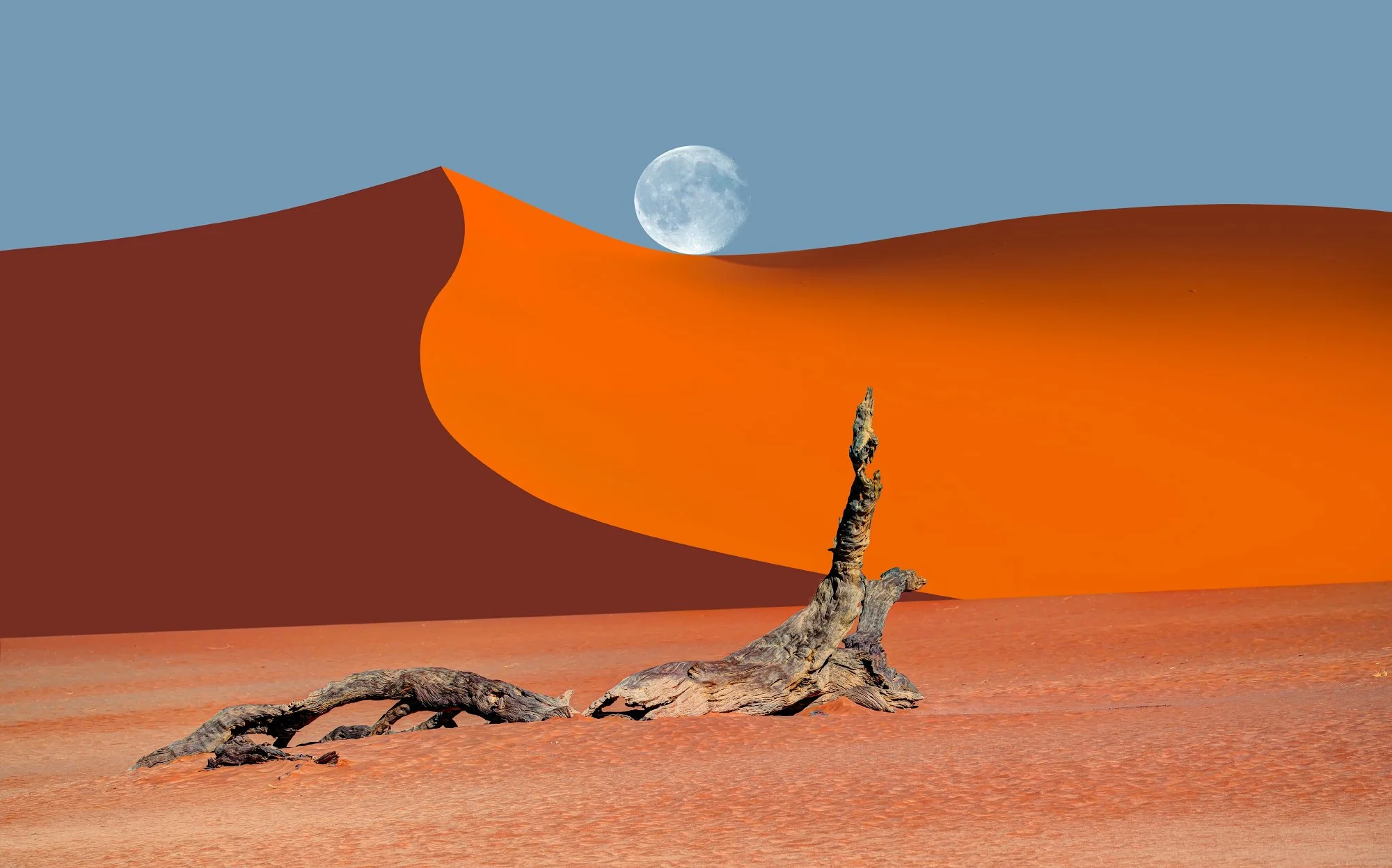
At first glance, Namibian deserts look easy to photograph. In reality, they are among the most demanding landscapes on Earth.
Dunes are repetitive. Horizons are clean. Colors are limited. Most images fail not because of bad light, but because photographers rely on color instead of structure, include too much meaningless space, or copy iconic compositions without understanding why they work.
Locations such as Deadvlei, the Namib dune sea, and the coastal deserts demand precision. Camera height matters. Framing often comes down to millimeters. Footprints, wind patterns and subtle changes in light direction can completely alter a composition.
The difference between a tourist photograph and a portfolio-level image here is rarely gear or luck. It is judgment — trained, deliberate and repeatable judgment.
🌌 Night Photography in Namibia — More Than Just Dark Skies
Namibia is one of the darkest accessible regions on Earth. Low humidity, minimal light pollution and vast open horizons create exceptional conditions for Milky Way photography, including the Milky Way core and full Milky Way arches.
But darkness alone does not create strong night images.
Successful night photography in Namibia requires understanding Milky Way geometry, planning precise foreground relationships, knowing when to use a star tracker — and when not to — and blending techniques that respect the scene rather than overpower it.
Here, night photography is not an optional add-on. It is a core discipline. Namibia rewards photographers who plan, wait and execute with intention, teaching methods that translate far beyond a single destination.
🌤️ Why April Is One of the Best Months to Photograph Namibia
Many photographers assume the best desert photography happens under permanently clear skies. That assumption is incomplete.
April offers a rare balance in Namibia: generally stable weather, comfortable temperatures for long shooting days and nights, and — critically — the occasional presence of clouds. Those clouds matter. They introduce depth, shadow and atmosphere, breaking the monotony of endless blue skies without destroying visibility.
For photographers, this balance makes April one of the most reliable months for both daylight desert photography and advanced night work, combining control with just enough unpredictability to create truly strong images.
Photo Tours vs Photo Expeditions — Why Namibia Exposes the Difference
Namibia is full of photography tours. Many of them run like a checklist: fixed viewpoints, fixed shooting angles, and a “line-up” at the same spots.
We do use a clear itinerary — because logistics in Namibia matter. But the photography plan is never rigid.
Our itinerary is a framework, and on location we work with Plan A/B/C every day: we choose the exact spots, angles and timing by light, wind, cloud structure and access. That means we don’t force the same composition in any conditions — and we don’t rush just to “tick places off”.
A true Namibia photo expedition focuses on progress: scenes are broken down from zero, decisions are explained, and you learn how to work independently — even when the conditions change.
Namibia doesn’t reward speed. It rewards understanding.
Why Photograph Namibia With Jan Šmíd, Master QEP
Namibia is not a destination where a guide simply points at a view and waits for everyone to press the shutter. It requires a different way of teaching — one focused on decisions, structure and long-term photographic growth.
I work with photographers in environments where mistakes are visible immediately. From Arctic tundra and glaciers in Alaska, through remote Atlantic coastlines, to the open desert systems of Namibia, the goal is always the same: to teach photographers how to work independently in demanding terrain, not how to copy a single successful frame.
This teaching philosophy is consistent across all my expeditions — whether it’s the Namibia Desert, Dunes & Night Photo Expedition 2027, the Alaska Fall Landscape & Glacier Photo Expedition 2026 or Alaska Fall Photo Workshop 2027, or other advanced landscape-focused journeys. Different environments, same principles: composition first, light second, execution last.
For photographers who have already experienced destinations where drama does most of the work, Namibia often becomes a turning point. It is where technique matures into judgment, and where strong images stop being accidents.
🎯 Who This Expedition Is — and Is Not — For
Namibia is not ideal if you want fast results, dramatic chaos doing the work for you, or easy compositions that succeed automatically.
Namibia is ideal if you want to simplify your visual language, gain full control over composition and scale, improve decision-making in extreme open environments, and build images that stand on structure rather than spectacle.
For photographers serious about long-term growth, Namibia is not just another destination.
It is a test — and one of the best teachers you can choose.
🎥 Learn on YouTube First
If you want to see how we actually work in the field — panoramas, bracketing, long exposure, aurora, advanced workflows — watch the tutorials on my channel:
👉 Jan Šmíd Photography – Official YouTube Channel. Every video shows real field conditions — not theoretical exercises.
✨ If You Want to Experience This Yourself
Explore all destinations here:
👉 www.smidphotography.com/expeditions
If you want to prepare before joining an expedition, start here:
👉 Individual Photography School
👉 Private One-to-One Courses
These programs give you the foundation that will transform your work on any expedition — Alaska, Iceland, Cyprus, Lofoten and much more.
Určeno i pro české a slovenské fotografy — fotoexpedice a fotoworkshopy Aljaška 2026 a 2027 / Skotsko (Vnější Hebridy) 2026 / Madeira 2026 / Island 2026.
And of course, subscribe to the YouTube channel for weekly videos packed with tips, field stories, and behind-the-scenes tutorials.
About the Author
Jan Smid is a Master QEP, Zeiss Ambassador and expedition leader working across a wide range of photographic environments — from demanding locations such as Namibia, Alaska, Iceland or Lofoten, to more relaxed and accessible destinations including Madeira and the Wachau. He is the recipient of over 300 awards from international photography competitions and runs an independent YouTube channel focused on real field photography, composition and long-term photographic growth.
❓ FAQ: Why Namibia Is One of the Most Demanding Photography Destinations on Earth
-
A photo workshop often focuses on logistics and iconic viewpoints. A photo expedition uses an itinerary as a framework but adapts daily to light, wind, cloud structure and access. The goal is not copying compositions, but learning how to make decisions independently in changing conditions.
-
Yes, there is a clear itinerary for logistics and travel. However, photographic decisions are made on location using a light-driven Plan A/B/C approach. Exact shooting spots, angles and timing are chosen based on current conditions, not a rigid schedule.
-
Yes. Namibia is especially valuable for photographers who want to improve composition, scale control and decision-making. The landscape forces you to slow down, simplify your vision and work intentionally instead of relying on dramatic scenery.
-
Namibia has some of the darkest accessible night skies on Earth. This makes it ideal for Milky Way photography, including the core and full Milky Way arch. Night sessions teach planning, geometry, tracked and untracked workflows, and blending techniques in real field conditions.
-
April combines generally stable weather with comfortable temperatures for long shooting days and nights. Unlike some other months, occasional clouds still appear, adding depth, contrast and atmosphere without destroying visibility — ideal for both desert and night photography.
-
Ano. I když je komunikace a obsah stránky primárně v angličtině, čeští a slovenští fotografové se expedic účastní pravidelně. V terénu vše vysvětlujeme srozumitelně — kompozici, práci se světlem, plánování focení i noční fotografii. Jazyková bariéra není problém, český lektor je vždy k dispozici.